Using AI for peer reviewing manuscripts is considered a breach of confidentiality. In this article we dive into how to use AI with finished manuscripts…
ChatGPT Canvas is new feature that allows to refine and write long academic texts with ChatGPT. Unlike before Canvas allows to direct prompts at single…
Using a simple nested-tag system and the note-gallery plugin to create a perfect learning hub for individual topics and never forgetting where you left your…
Nested Knowledge is a tool designed to organize systematic literature reviews, search databases like PubMed and comes with an innovative tagging method to organize, visualize…
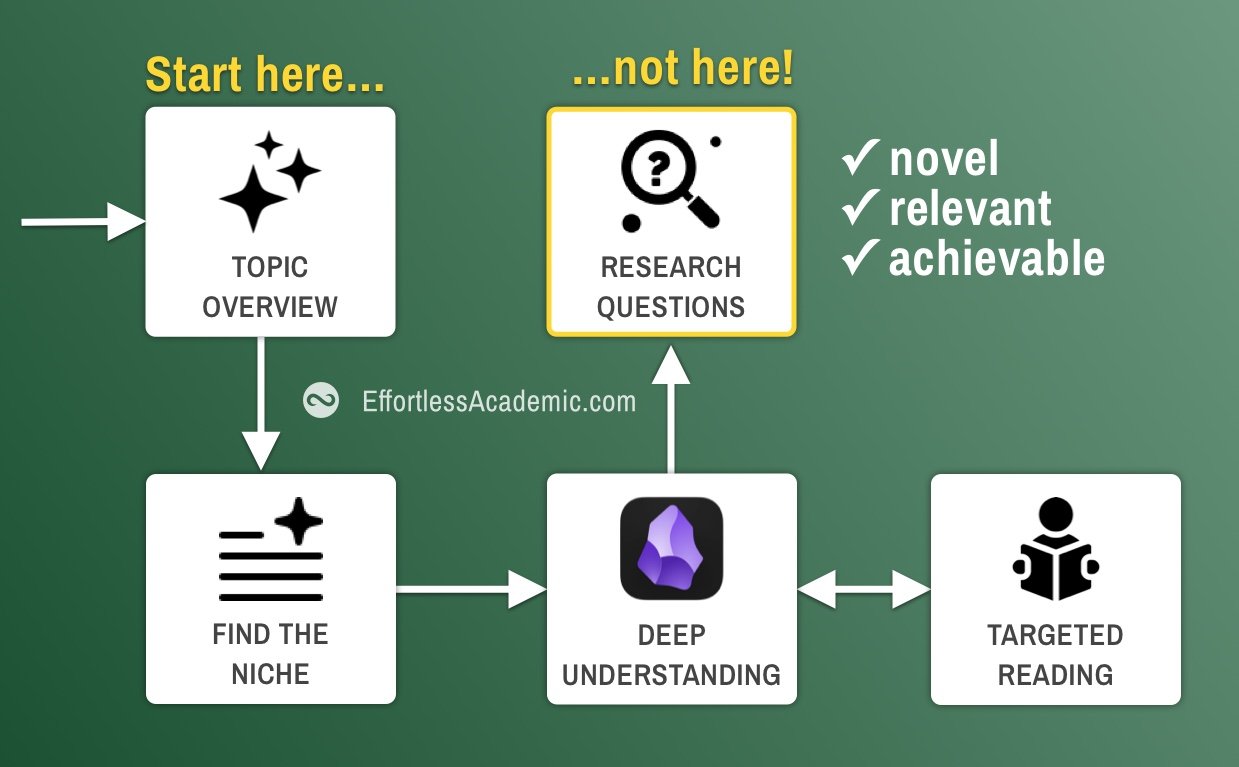
Most advice on literature reviews starts with finding a research questions. This is just wrong, a research question is the last thing a good literature…
In September 2024 OpenAI released o1, it’s most powerful model yet. It has much higher reasoning capabilities and for the first time can perform academic…
Google Docs is the most powerful, versatile and fast word editor, but publishing a scientific paper with its formatting and citing requirements, tables, and figures…
ResearchKick is a tool to craft novel and compelling research questions to direct your research, extend the discussion section and prepare for presentations.
Three techniques (reading lists, paper kanban and reference maps) to make your literature review effortless, smooth and enjoyable. Find balance in the literature review triangle.
Keeping up with an increasing number of publication becomes harder and harder. Luckily we can combine a set of tools and practices to help…
Start your free 21-day course
This course is for any academic, student, researcher or knowledge worker who wants to learn topics faster, keep track of sources and write more efficiently.
Every day, you’ll get one email with a dedicated lesson.